Should I do this?

I’ve been exploring a problematic use of the word should.
I’m not talking about that self-helpy, cringey phrase “Don’t should on yourself.”
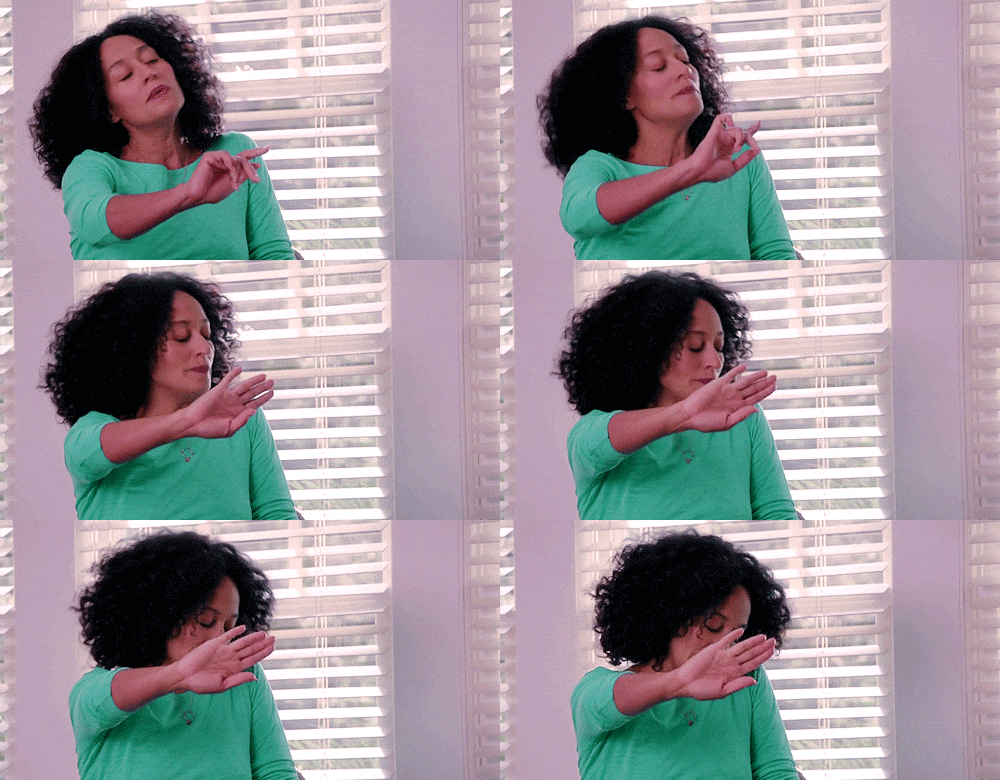
Nor am I referring to how it’s used in casual conversation (“You should totally go skydiving! 🪂😳)
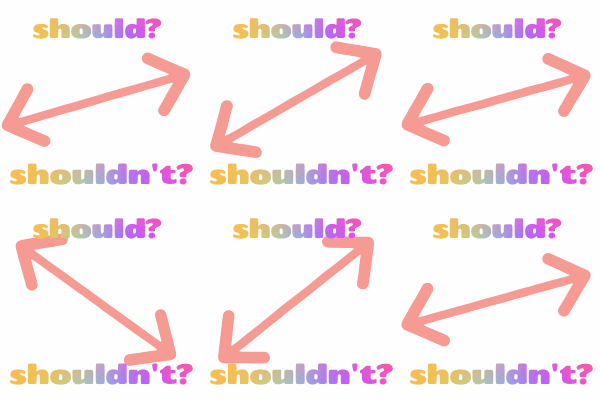
Instead, I’m referring to the use of should/shouldn’t as a decision-making framework: should I do this or should I do that?
This kind of question can keep me spinning, doubting, and indecisive.
One of my mentors, Thomas Hübl, says:
“The concept of Should or Shouldn’t sits on top of a defense. It creates a filter that screens out something essential, making it invisible.
Should is a distraction from a deeper experience that couldn't be fully processed.
Otherwise, there is no should.
‘What should I do?’ is not a relevant question for a mature perspective—it’s a regressive question sitting on a defense.”
🤯
Wait, what?? My brain goes on tilt —until I realize he’s pointing to a disruption of trust — reducing trust in ourselves.
We get sidetracked by the pressure to “get life right,” avoiding perceived failures or scary mistakes—even when the stakes are low.
Instead of answering the should question, Hübl asks:
What produces that question in the first place?
Why isn't our powerful inner guidance—our gut, emotions, purpose, agency, and intellect—functioning properly?
In the absence of inner wisdom and guidance, I can scramble for the “right” answer, fueled by distress and an unconscious hope for a guarantee.
I’m looking for something to protect me from criticism, embarrassment, or perceived harm of any kind.
Trust is nowhere in sight - I’m not even thinking about trust. That’s because I’m already disconnected. I’m going for a made-up version of safety.
I believe it’s fair to say that anytime we’re operating from should, we’re essentially asking someone or something else—society, mentors, coaches, parents, therapists, God—to make the decision for us. We’ve outsourced our authority to choose.
Here’s what I’m learning (again):
The quest isn’t to get it right.
It’s to get it real.
Getting it right assumes there’s a perfect answer.
Getting it real means we’re more interested in experimenting, learning, growing. We understand we might stumble, we might course-correct. Most importantly, regardless of the direction we choose, we trust we can handle whatever comes next.
When we drop the should-based decision-making framework and tune into our inner guidance, we discover something remarkable.
Either:
We already know what we want to do, or
We can discern the difference between external expectations and what is most aligned with our character and purpose, or
We learn to tolerate the discomfort of not knowing.
All three are acts of courage and daring.
All three strengthen inner trust.
In the words of a dear friend and teacher: Dare to get it “wrong” in pursuit of what’s “right” (in this case: trusting yourself).
Try This:
The next time you catch yourself thinking “Should I do this or that?” — pause.
Instead of chasing that question, get curious about what's underneath it.
Step 1: Drop In
Slow down.Then consider:
What am I afraid will happen if I get this “wrong”?
What am I trying to protect myself from?
Just notice the answers—no fixing required.
Step 2: Ask a Better Question
“What would I choose if I trusted myself to handle whatever comes next?”
Let your answer rise gently from within. You might not get a clear directive—but you will likely feel a softening, a shift, or even a quiet nudge.
Step 3: Take One Brave Step
Dare to trust your ability to cope.
Quote this Genius:
We can do hard things. But we can’t do them by asking everyone else what they’d do. We find our next right thing by doing the next thing that feels right in us. — Glennon Doyle
Thank you Michelle for reframing should. You’re absolutely right that it’s an attempt to avoid responsibility, but all it really does is disempower us.
Thank you for these insights and the simple, but powerful process, Michelle.
Another question for Step 1 just popped into my head: Whose approval am I seeking? (And why?)
Thanks for the invitation to get curious about stuff like this. ❤️